What do ancient hero Odysseus and modern vigilante Batman reveal about the evolving nature of heroism across civilizations? This analysis explores how these iconic figures embody enduring archetypes rooted in human ambition, resilience, and moral complexity. Odysseus, shaped by Greek ideals of cleverness and endurance, reflects a society that revered divine favor and personal honor—facing divine wrath and chaos through wit. In stark contrast, Batman embodies contemporary anxieties about crime, corruption, and moral ambiguity, navigating a fractured society that demands strategic thinking amid darkness and decay. Their stories serve as mirrors of societal fears and aspirations, illustrating how heroism adapts to cultural contexts—whether divine justice or human resilience. As we delve into their core qualities—bravery, resilience, strategy—we’re prompted to ask: What traits will define future heroes in a world of rapid change and complex moral landscapes? Their enduring tales challenge us to confront our own struggles with courage, ingenuity, and moral resolve.
Contents

Unveiling the Universal Nature of Heroic Archetypes
Heroism isn’t confined to a single time or place; it’s a universal idea that appears in stories from every corner of the world. Across cultures and eras, heroic figures embody traits that mirror the values, fears, and hopes of their societies. In ancient myths, heroes like Hercules or Achilles represented strength, bravery, and moral virtue—qualities that were celebrated and admired. Today’s heroes, however, tend to be more complex, blending personal struggles with a sense of moral purpose. These characters serve as mirrors for societal ideals, revealing what each culture considers admirable or worth striving for.
Despite their differences, heroic figures share some core qualities. They often face daunting challenges that test their physical, mental, and moral limits. Whether battling monsters, divine forces, or crime, heroes demonstrate resilience and courage in the face of adversity. They also tend to act with a sense of moral purpose, seeking to protect others or uphold values that transcend personal gain. This combination of bravery, endurance, and morality creates stories that inspire generations and reinforce societal ideals.
Looking at figures like Odysseus and Batman helps us see how these archetypes have evolved over time. Odysseus, rooted in ancient Greek culture, exemplifies traits such as cleverness, endurance, and honor—values that celebrated martial skill, wisdom, and divine favor. His story is about overcoming divine wrath, monsters, and chaos through wit and perseverance. In contrast, Batman, a modern hero, reflects contemporary anxieties about morality, justice, and human darkness. His vigilante persona taps into fears about crime and corruption, emphasizing strategic thinking and moral ambiguity—traits that resonate with today’s societal concerns.
These differences highlight how heroism adapts to the cultural context. Ancient heroes like Odysseus embody virtues linked to personal virtue, loyalty, and divine approval. Modern heroes like Batman often grapple with moral gray areas, personal trauma, and societal decay. Their stories reveal what each society fears and aspires to—whether it’s divine justice or human resilience. By comparing these figures, we gain insight into how societal values shape the stories we tell and the heroes we admire.
Understanding this evolution shows that heroism remains a reflection of human ambition and the universal desire to overcome chaos. From ancient Greece to today’s comic books, heroes symbolize resilience, strategy, and moral resolve. They remind us that regardless of the era or culture, our stories of heroism reveal what we hold dear—our hopes, fears, and dreams for a better world. Recognizing these archetypes helps us see how deeply intertwined our stories are with the societies that create them, shaping and reflecting our collective identity through the ages.
Cultural Roots Shaping Odysseus and Batman’s Legacies
Understanding the cultural roots of Odysseus and Batman illuminates how their stories mirror the values, fears, and priorities of their respective societies. Odysseus’s character is shaped by ancient Greek ideals, emphasizing cleverness, endurance, and honor. These traits were considered essential virtues in a culture that prized martial skill, wisdom, and divine favor. His adventures—like devising the Trojan Horse or escaping Circe’s spell—highlight a society that admired cunning and resilience as means to overcome divine and mortal obstacles.
In stark contrast, Batman’s persona reflects the concerns of modern society. His vigilante approach embodies fears surrounding crime, moral ambiguity, and the darker aspects of human nature. Unlike Odysseus, whose cleverness was primarily about survival and reputation, Batman’s traits reveal a society preoccupied with justice amid corruption and chaos. His relentless fight against Gotham’s criminals underscores collective anxieties about societal breakdown and the erosion of moral boundaries, emphasizing a need for heroes who operate in moral gray areas.
These cultural foundations reveal how each hero embodies the dominant values and anxieties of their time. Odysseus’s resilience and wit respond to a universe where divine forces could punish or reward based on pride and hubris. His heroism signifies a belief that human ingenuity can navigate divine wrath and restore order. Conversely, Batman’s resilience and strategic mind are responses to a world where societal stability feels fragile, and darkness lurks beneath the surface. His shadowy presence embodies the modern fear that chaos and moral decay threaten to overwhelm civilization.
The stories of Odysseus and Batman are deeply rooted in their cultural contexts, shaping their moral frameworks. Odysseus acts driven by personal honor and divine approval, reflecting a society that values loyalty, virtue, and divine favor. Batman’s morality, however, is more complex—operating outside traditional laws and questioning what is right and wrong. His willingness to bend rules echoes a society grappling with moral gray areas, where justice often demands flexibility and moral ambiguity.
Morality plays a central role in shaping their narratives. Odysseus’s actions, sometimes morally ambiguous, are driven by a desire to uphold personal and societal honor. His cleverness is seen as a necessary trait to gain divine favor and restore societal harmony. Batman’s morality is rooted in the pursuit of justice, even if it means operating outside the law. His actions reflect a society that recognizes the complexities of morality in a world filled with corruption and chaos.
These cultural differences highlight the evolution of hero archetypes over time. Odysseus’s traits—wisdom, endurance, loyalty—mirror ancient Greek ideals that reinforced social cohesion and divine legitimacy. Batman’s strategic thinking and moral flexibility, meanwhile, reflect contemporary concerns about societal decay and the limits of justice. Their stories demonstrate that heroism adapts to the prevailing fears and hopes of each era, always centered on resilience and strategic action.
Ultimately, Odysseus and Batman are more than mere characters; they symbolize their societies’ collective psyche. Odysseus embodies a culture that believed wisdom and perseverance could tame divine chaos and restore order. Batman represents a world where justice is complex, and heroes must navigate moral gray areas to confront internal and external darkness. Their stories reveal that heroism is shaped by cultural landscapes—reflecting societal hopes, fears, and moral priorities—while also inspiring us to confront our own challenges with resilience and ingenuity.
Fundamental Traits Defining True Heroism
Heroism revolves around core traits like bravery, resilience, and a strong moral drive to face challenges head-on. Both Odysseus and Batman exemplify these qualities, though they express them in different ways suited to their worlds. Odysseus’s heroism is rooted in his cleverness and strategic thinking. His ability to outwit enemies, divine forces, and obstacles through quick wit and planning sets him apart. His resilience shines in his long journey home, enduring storms, monsters, and divine wrath without losing hope. This mental toughness and adaptability are what enable him to keep moving forward despite overwhelming odds.
Batman’s heroism also depends heavily on resilience—persisting through personal trauma, moral dilemmas, and Gotham’s often hostile environment. His strategic mind is his most valuable weapon, using intelligence, technology, and psychological insight to stay ahead of criminals and maintain order. Both heroes show that heroism isn’t just about physical strength; it’s about enduring setbacks, adapting to new threats, and staying committed to a purpose despite adversity. Their stories demonstrate that mental toughness and moral resolve are essential components of heroism, regardless of the era or setting.
Cleverness and strategy are at the heart of both figures, though they manifest differently. Odysseus’s heroism is characterized by wit—his knack for devising clever plans like the Trojan Horse or escaping danger through cunning. His resilience is evident in his decade-long voyage, refusing to surrender even when divine punishment and mortal peril threaten to overwhelm him. Batman, on the other hand, relies on meticulous planning, advanced technology, and psychological resilience. His ability to anticipate enemies’ moves and adapt tactics keeps him several steps ahead in Gotham’s dark landscape.
Both heroes also reveal that heroism involves a moral purpose. Odysseus seeks to restore his honor and fulfill his destiny, driven by personal and societal values. His cleverness and endurance serve these goals, often aligning with divine expectations. Batman’s moral drive centers on justice—fighting crime and corruption to protect his city. His resilience and strategic mastery reflect a desire to confront societal darkness, even if it means operating outside traditional rules. Their traits highlight how heroism adapts to cultural values, emphasizing perseverance, intelligence, and moral clarity.
Despite their differences, Odysseus and Batman teach us that resilience and strategic thinking are timeless qualities essential for facing adversity. They show that heroism isn’t merely about physical prowess but about mental toughness, adaptability, and moral commitment. Their stories remind us that enduring setbacks and staying true to a purpose are what define true heroism—traits that remain relevant across centuries and cultures. In their own ways, both figures underscore that the core of heroism lies in the human capacity to persevere and think wisely in the face of chaos.
Understanding these enduring qualities allows us to see how heroism continues to evolve across different cultures and eras. For a deeper exploration of how ancient Greek values are reflected in Odysseus’s character and how they compare to modern heroes like Batman, you can read a detailed comparative analysis of odysseus and batman’s heroism traits.
Heroes as Mirrors of Societal Fears and Struggles
Odysseus and Batman serve as powerful symbols of their societies’ deepest fears and collective struggles. Odysseus’s journey reflects ancient Greek concerns with divine punishment, pride, and the chaos of war. His cleverness and resilience are responses to a world where gods could punish mortals for hubris, and where survival depended on wit and endurance. His ability to outsmart divine and mortal enemies alike embodies a society’s hope that intelligence and perseverance can navigate divine wrath and restore order and honor.
In contrast, Batman embodies modern societal fears of crime, moral decay, and the limits of justice. His vigilante persona springs from a world where traditional institutions often fail to protect citizens, and where darkness lurks beneath civilization’s surface. Batman’s relentless fight against Gotham’s criminals highlights collective anxieties about societal collapse and the erosion of moral boundaries. His willingness to operate outside the law underscores a society questioning whether justice can be achieved through conventional means and whether moral ambiguity is an unavoidable consequence of confronting chaos.
Both heroes encapsulate the universality of human ambition—Odysseus’s drive to return home and reclaim his honor mirrors society’s desire to restore stability after upheaval. Batman’s pursuit of justice reflects a collective aspiration for safety and moral order amid uncertainty. Their stories, set in vastly different worlds, reveal how societies project hopes and fears onto these archetypes. These figures are more than individual heroes; they are reflections of societal resilience and the collective effort to confront chaos and restore meaning.
Odysseus’s resilience and cunning symbolize a culture’s reliance on mental agility to face divine and mortal threats. His stories serve as metaphors for navigating divine wrath and mortal chaos, reinforcing a belief in human ingenuity. Conversely, Batman’s darkness and strategic resilience mirror modern anxieties about societal fragility and corruption. His shadowy figure signifies a recognition that justice is complex, and that confronting evil may require moral flexibility. Both heroes stand as responses to the core fears their societies grapple with—divine punishment or societal breakdown.
Their tales reveal how cultural values shape the moral frameworks of heroism. Odysseus’s actions are driven by personal honor and divine approval, emphasizing loyalty and virtue as societal ideals. Batman’s morality is more fluid, often questioning traditional notions of right and wrong. Operating outside the law, he embodies a society that recognizes the moral gray areas of justice in a world filled with decay and chaos. Their stories demonstrate heroism’s evolution, always rooted in resilience and strategy but shaped by the fears and hopes of their respective worlds.
Reflections on Heroism’s Evolution and Its Meaning Today
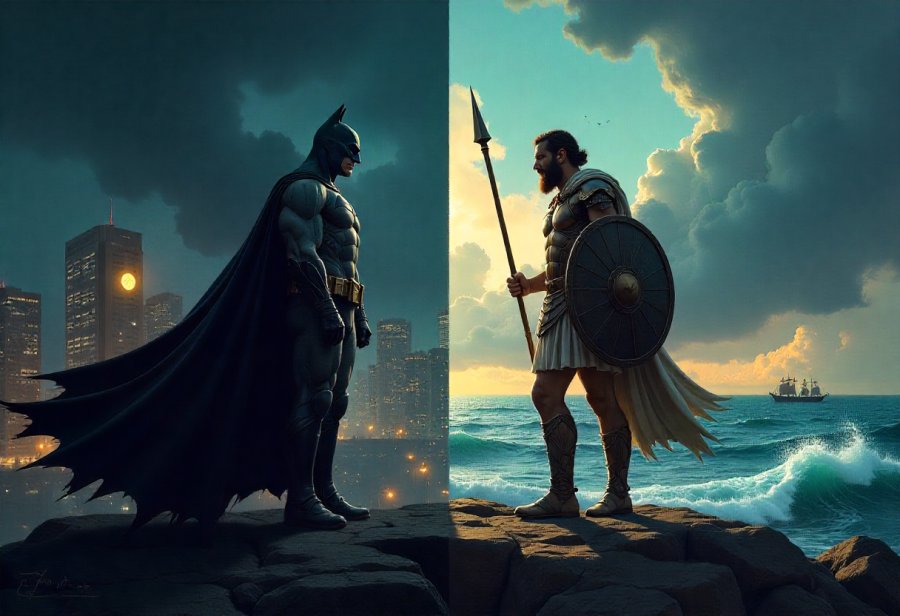
The comparison between Odysseus and Batman shows us that, despite their vastly different origins and worlds, both characters embody core human qualities like resilience, strategic thinking, and a relentless pursuit of meaning. Odysseus’s cleverness and endurance reflect the values of ancient Greece—virtues like wisdom, honor, and perseverance that defined heroism in that era. Batman’s moral complexity and strategic mind, on the other hand, mirror modern society’s fears of chaos, crime, and the darker aspects of human nature. Their stories reveal that heroism is not fixed; it evolves over time to mirror society’s hopes and anxieties, yet always roots itself in the universal desire to overcome adversity.
Today’s heroes are still shaped by the societal issues they reflect. Odysseus’s journey reminds us of a time when divine forces and mortal pride defined heroism—where wit and resilience were tools to restore order from chaos. Batman’s narrative highlights contemporary concerns—moral ambiguity, societal decay, and the struggle to uphold justice in a fractured world. Both figures serve as mirrors for their cultures, illustrating how collective fears and aspirations influence the traits we admire most. Their enduring stories teach us that qualities like resilience, strategic thinking, and moral resolve remain vital, no matter the era or setting.
Looking ahead, hero archetypes will continue to adapt as societal challenges evolve. Issues like climate change, social inequality, and technological upheaval may inspire future heroes to embody traits such as empathy, diversity, and moral nuance. While resilience and strategic thinking will likely stay central, their expressions could shift to reflect new priorities. Whether in stories, media, or real life, heroism will continue to serve as a way for us to understand ourselves and navigate the chaos around us.
Both Odysseus and Batman show that hero archetypes are more than mere stories—they are reflections of our collective hopes, fears, and values. Their lasting appeal lies in their ability to inspire resilience and strategic action amid uncertainty. These figures remind us that heroism is a dynamic, evolving force rooted in the human spirit, capable of guiding us through our own struggles. Recognizing how societal context shapes these archetypes helps us better understand our shared journey—both as individuals and as a society.
Their stories also reveal that heroism isn’t just about grand feats or divine intervention; it’s about qualities we can cultivate daily. Resilience, strategic thinking, and moral integrity are skills that help us confront personal and societal challenges alike. Odysseus and Batman exemplify how perseverance and intelligence can turn chaos into opportunities for growth. Their narratives affirm that heroism isn’t about perfection but about the willingness to stand firm and adapt, even in the darkest moments.
By exploring these archetypes, we see that human stories continually evolve in response to societal shifts. Both heroes teach us that collective fears and hopes shape the ideals we aspire to—whether it’s divine favor or moral gray areas. Their ongoing relevance underscores that resilience and strategic action are timeless tools for navigating life’s uncertainties. In recognizing these qualities, we find inspiration not only in myth and fiction but also within ourselves—our capacity to face adversity with purpose and resolve.
In the end, Odysseus and Batman demonstrate that hero archetypes are more than stories—they are mirrors of our collective psyche. Their enduring relevance lies in their ability to inspire resilience and strategic thinking, qualities we need to confront today’s complex world. Their stories remind us that heroism is a reflection of human ambition—an ongoing quest to find meaning amid chaos. As we face our own uncertainties, these figures encourage us to cultivate perseverance and ingenuity, helping us turn adversity into opportunities for growth.
Their narratives invite us to see heroism as a dynamic force rooted in human resilience and strategic insight. Whether rooted in divine myth or modern fiction, the core qualities they embody remain vital—qualities that empower us to navigate chaos and seek purpose. By understanding how these archetypes evolve with society’s fears and hopes, we gain a deeper appreciation of our collective capacity for courage and adaptation. In recognizing these timeless traits, we find the strength to face our challenges, inspired by the heroes of the past and present alike.