Cleopatra VII is often remembered through romanticized legends, yet her true legacy lies in her extraordinary intellect, strategic brilliance, and diplomatic mastery. Could a ruler’s power truly reside in the mind? This portrayal reveals Cleopatra as a formidable scholar-queen who navigated the complex geopolitical landscape of ancient Egypt with wit and resilience. Fluent in multiple languages, she leveraged her cultural knowledge and patronage of the Library of Alexandria to bolster her authority and foster innovation. Her alliances with Julius Caesar and Mark Antony weren’t mere personal relationships, but calculated political moves designed to defend Egypt’s independence amid rising Roman dominance. Renowned scholars highlight her ability to operate effectively in a male-dominated world, emphasizing that her influence was rooted in intelligence, diplomacy, and cultural diplomacy. Cleopatra’s legacy challenges us to consider how leadership driven by wisdom, resilience, and strategic foresight can leave a profound and enduring impact—reminding modern leaders that true power lies in the strength of the mind.
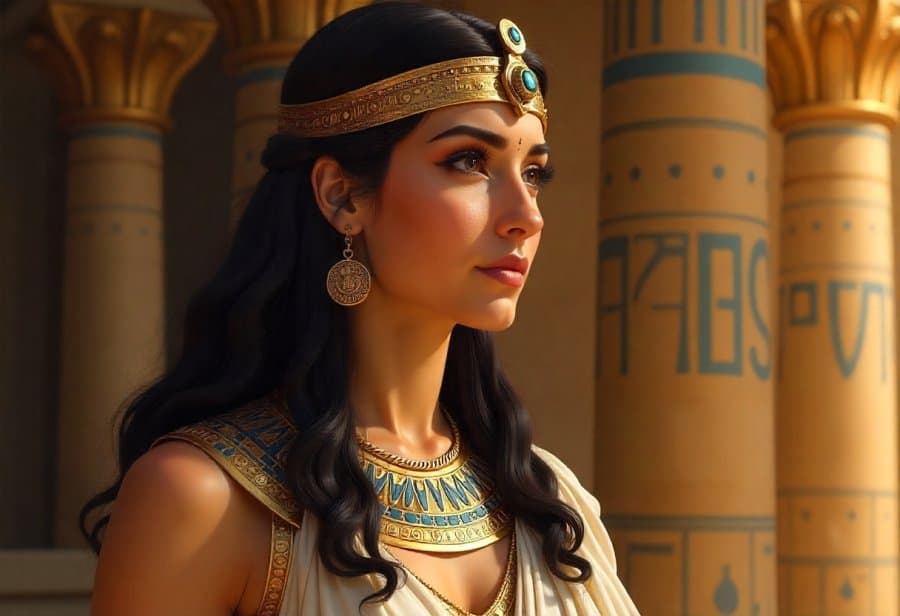
Cleopatra VII: A Leader of Mind and Mastery
Cleopatra VII is often remembered as one of history’s most captivating figures, but her true legacy extends far beyond the glamour and romance often associated with her image. She was a ruler whose strength was rooted in her sharp mind, strategic insight, and political acumen. Unlike the Hollywood portrayal that emphasizes beauty and seduction, Cleopatra’s leadership was built on her ability to navigate complex diplomatic waters and make calculated decisions that protected Egypt’s independence.
As the last active Pharaoh of Egypt, Cleopatra inherited a land rich in tradition but facing increasing external threats. Egypt was a powerful, independent kingdom, gradually coming under pressure from the expanding Roman Republic. Her reign took place amid internal struggles, Macedonian influences from her Ptolemaic ancestors, and the challenge of maintaining sovereignty. It was her talent for balancing these competing interests through alliances and diplomacy that defined her leadership.
Cleopatra’s influence was not based solely on her appearance or personal relationships. Instead, it stemmed from her intelligence, her dedication to scholarship, and her ability to inspire loyalty through her political insight. She understood the importance of forming strategic alliances, often making calculated moves to ensure her kingdom’s stability. Her relationships with Julius Caesar and Mark Antony weren’t just personal—they were tactical, aimed at preserving her power and Egypt’s independence in a hostile world.
A key behind her effectiveness was her multilingual ability. Fluent in Egyptian, Greek, Latin, and several other languages, Cleopatra could communicate directly with a wide range of diplomats, scholars, and foreign leaders. This linguistic mastery enabled her to build relationships based on mutual respect and understanding, strengthening her diplomatic position across the Mediterranean. Her ability to speak the language of power—both literally and figuratively—was a vital asset.
Her education and close ties to the Library of Alexandria further underscore her commitment to learning. Cleopatra saw knowledge as a crucial tool for leadership, blending Egyptian traditions with Hellenistic ideas to foster a cultural and intellectual environment that reinforced her authority. Her deep engagement with scholarship and her patronage of the library reflected a ruler who believed wisdom was essential to her strength.
Beyond her political and diplomatic skills, Cleopatra was a deeply curious scholar herself. Her interests ranged from philosophy and mathematics to astronomy and sciences. Her multilingualism and scholarly pursuits allowed her to access and contribute to a broad spectrum of knowledge, which she used to inform her leadership. This intellectual curiosity set her apart as a ruler who valued wisdom just as much as power.
Her legacy is a testament to the idea that true influence resides in the mind. Cleopatra understood that leadership depended on mastering ideas, cultural understanding, and resilience. Her ability to adapt and leverage her intelligence helped her navigate turbulent times, securing her place in history not just as a queen, but as a formidable strategist and thinker whose influence endures today.
Her Intellectual Prowess: The Multilingual Scholar Queen
Cleopatra VII’s reputation as a formidable leader is closely tied to her scholarly pursuits and her mastery of multiple languages. Fluent in Egyptian, Greek, Latin, and several other tongues, she could communicate directly with a diverse array of diplomats, scholars, and foreign dignitaries. This linguistic versatility was more than just a diplomatic tool; it reflected her genuine curiosity and respect for different cultures. Her ability to speak the language of her allies and rivals alike gave her an edge in negotiations, allowing her to build relationships rooted in mutual understanding rather than relying solely on interpreters or intermediaries.
Her close association with the Library of Alexandria, the ancient world’s most renowned center of knowledge, underscores her deep commitment to learning. Cleopatra’s patronage of the library and its scholars was a deliberate move to position herself as a ruler who valued wisdom and education. She fostered an environment where ideas could flourish, blending Egyptian traditions with Hellenistic philosophies to create a vibrant intellectual hub. This dedication to scholarship reinforced her authority, demonstrating that her leadership was grounded in knowledge as well as power.
Beyond her role as a political figure, Cleopatra was an active participant in scholarly activities herself. She had a keen interest in philosophy, mathematics, astronomy, and sciences, often engaging directly with the thinkers of her court. Her multilingual skills allowed her to access, challenge, and contribute to a wide spectrum of ideas circulating in her realm. This intellectual engagement helped her cultivate a reputation not just as a ruler, but as a learned queen whose wisdom extended beyond politics into the realm of ideas.
Her mastery of Egyptian religious and cultural traditions further strengthened her legitimacy. Cleopatra understood the importance of connecting with her people’s core beliefs, while also integrating Greek artistic styles and philosophical ideas. This cultural fusion made her a symbol of both continuity and innovation, appealing to a broad spectrum of her subjects and allies alike. Her ability to navigate these dual identities was a key element of her leadership, reinforcing her authority both internally and externally.
Her upbringing in Macedonian royal circles emphasized diplomacy and strategic thinking, shaping her pragmatic approach to leadership. Cleopatra thought several steps ahead, leveraging her cultural knowledge and scholarly pursuits to craft alliances and make decisions that served her long-term goals. Her intellectual foundation was instrumental in helping her adapt to external threats and internal unrest, maintaining her influence amid turbulent times.
Cleopatra’s legacy as a learned queen is a testament to her belief that true power resides in the mind. Her multilingual abilities, dedication to scholarship, and cultural awareness made her a leader who valued wisdom just as much as strategy. This combination of intellectual curiosity and political savvy set her apart from many of her contemporaries, cementing her place as a ruler whose influence endures through the strength of her mind.
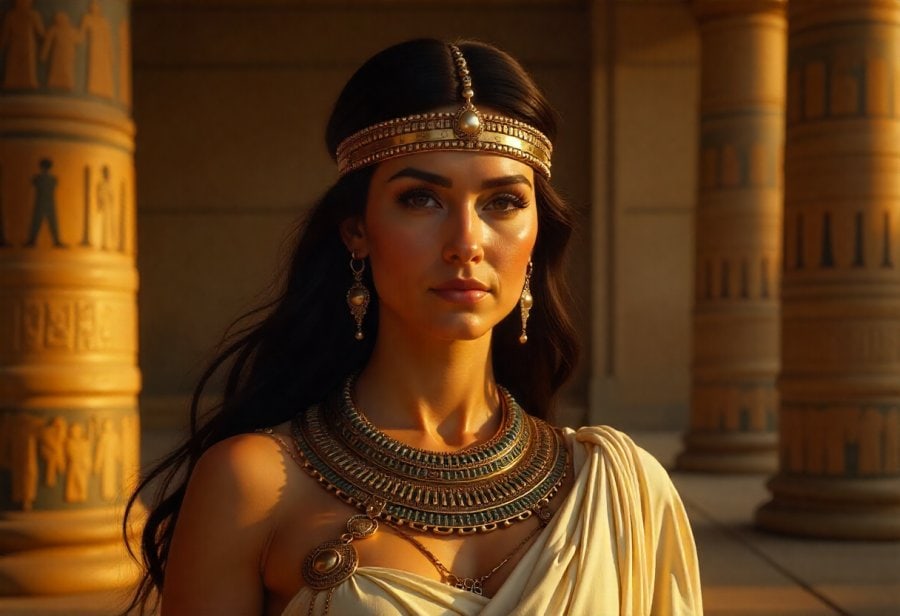
Strategic Alliances and Politics: Mastering Diplomacy with Rome
Cleopatra’s alliances with Julius Caesar and Mark Antony exemplify her mastery of political strategy, blending diplomacy, cultural insight, and keen timing to secure Egypt’s interests. These relationships weren’t driven solely by personal affection; they were calculated moves designed to strengthen her position amid a world increasingly dominated by Rome. When internal rebellion threatened her throne, her meeting with Caesar—concealed in a rug—was a bold, unconventional tactic that quickly established her legitimacy. This strategic partnership transformed a fragile situation into a decisive victory, showcasing her ability to seize opportunities when others might hesitate.
Her alliance with Caesar went beyond mere marriage; it was a political maneuver that helped her stabilize Egypt’s internal chaos and project strength outwardly. Cleopatra understood the importance of Roman perception, using her charm, intelligence, and regal image as tools to influence Roman politics. She skillfully positioned herself as an essential player, leveraging her relationship with Caesar to extend her influence across the Mediterranean, often turning personal rapport into diplomatic leverage. This was a calculated effort to secure Egypt’s sovereignty against external threats.
Later, her partnership with Mark Antony was equally rooted in strategic necessity. Facing the rise of Roman imperialism, Cleopatra aimed to forge a united front capable of resisting encroachment. Their alliance was built on shared interests—preserving Egypt’s independence and maintaining her own power. Cleopatra cultivated this relationship with a mix of political pragmatism and cultural diplomacy, blending Egyptian religious authority with Greek court customs to legitimize her rule and reinforce her influence. Her ability to balance these elements demonstrated her diplomatic finesse.
Cultural symbolism played a vital role in Cleopatra’s diplomacy. She used courtly rituals, marriages, and religious displays to legitimize her authority and deepen alliances. By integrating Egyptian traditions with Greek influences, she created a powerful cultural narrative that resonated internally and externally, strengthening her legitimacy even amid turbulence. Her understanding that influence depended not just on military might but also on perception allowed her to craft a resilient and adaptable leadership style.
Her talent for thinking several steps ahead shaped her entire approach to diplomacy. Cleopatra recognized that Roman ambitions threatened her kingdom’s independence, so her alliances served as strategic buffers. She used her relationships with Caesar and Antony to buy time, neutralize threats, and extend her influence as long as possible. Though reliant on external support, her skill lay in turning these connections into long-term advantages, always aiming to keep Egypt afloat amidst shifting political tides.
While her reliance on Roman alliances carried risks, Cleopatra’s ability to leverage these relationships effectively highlights her talent as a master strategist. Her influence was built on a nuanced understanding of cultural symbols, political timing, and personal diplomacy. This sophisticated approach allowed her to navigate a complex landscape, making her alliances tools of statecraft rather than mere personal bonds. Her strategic thinking and cultural acumen remain central to her legacy as a leader who used intellect and diplomacy to shape history.
Expert Perspectives: Scholars Recognize Her Leadership and Legacy
Many historians and scholars see Cleopatra as more than just a romantic figure; they recognize her as a highly strategic and politically astute leader. Experts like Stacy Schiff and Duane W. Roller emphasize her ability to operate effectively in a male-dominated world, highlighting her diplomatic finesse and resilience. They point out that her influence extended far beyond her personal relationships, showcasing her talent for managing court intrigues and external threats with a sharp mind and adaptability.
Scholars often praise her for her sophisticated blend of diplomacy and cultural insight. Her alliances with Julius Caesar and Mark Antony are seen as textbook examples of political strategy—carefully crafted moves that prioritized Egypt’s independence and stability. Her bold decision to meet Caesar secretly, wrapped in a rug, exemplifies her resourcefulness and willingness to use unconventional tactics under pressure. These episodes underscore her mastery at turning risks into opportunities, often outmaneuvering rivals with intelligence and daring.
Many experts also acknowledge her vulnerabilities, noting that her reliance on Roman support made her kingdom vulnerable to shifting tides in Roman politics. Her dependence on external alliances ultimately contributed to Egypt’s loss of independence after her death. However, they argue that her ability to leverage these relationships to her advantage for as long as possible underscores her skill as a master strategist. Her diplomatic approach, often blending symbolism with pragmatic negotiations, helped her sustain influence even amid external chaos.
Her leadership style is frequently compared to modern notions of influence rooted in knowledge and resilience. Scholars emphasize that Cleopatra understood the importance of cultural diplomacy—using religious symbols, courtly rituals, and language to legitimize her rule and project power. Her multilingual abilities and scholarly pursuits reinforced her reputation as a ruler who led with both wisdom and strength, qualities that continue to inspire analyses of effective leadership.
Overall, the consensus among experts is that Cleopatra’s legacy is defined not just by her dramatic story but by her brilliance as a leader. Her keen understanding of political nuance, her ability to adapt, and her strategic foresight set her apart from many of her contemporaries. Her life offers enduring lessons: influence built on intelligence, cultural awareness, and resilience can leave a mark that withstands the test of time.
Her story reminds us that true leadership is rooted in the power of the mind and the capacity to navigate complex relationships. Cleopatra’s mastery of diplomacy and her deep engagement with scholarship demonstrate that influence depends on learning, adaptability, and strategic thinking. These qualities made her a formidable figure whose legacy continues to resonate, illustrating how intellectual strength can shape history as powerfully as military might.
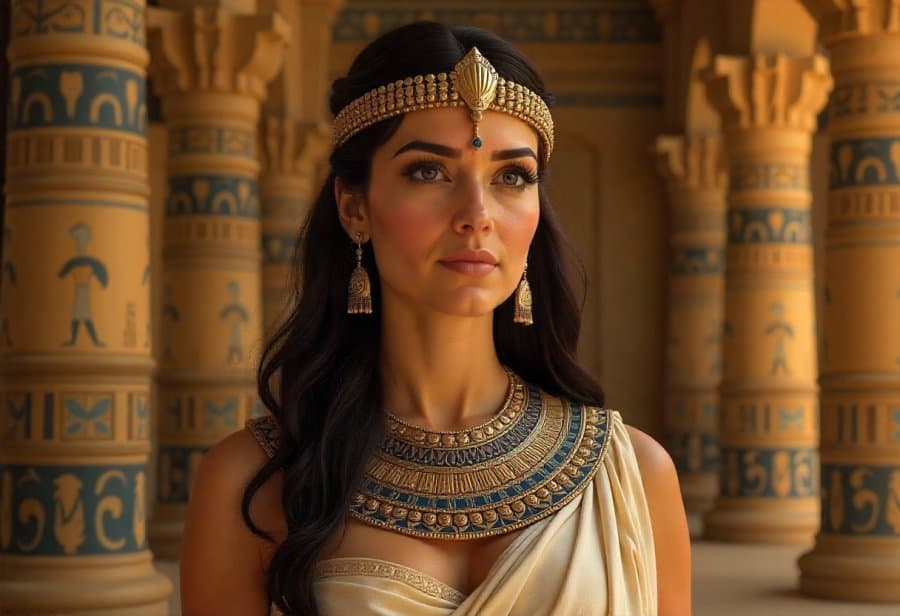
Conclusion: Cleopatra’s Enduring Influence and Lessons for Leaders
Cleopatra’s influence endures because her leadership was rooted in her remarkable intellect and strategic mastery. She understood that true power came from mastering diplomacy, cultural insight, and resilience—traits that allowed her to navigate a complex and often hostile world. Her ability to adapt her approach, forge vital alliances, and leverage knowledge over brute force made her a master of influence. This legacy serves as a reminder that authentic leadership isn’t just about authority or appearance; it’s about the strength of the mind and the capacity to think several steps ahead.
Her story offers timeless lessons for modern leaders facing global challenges. Cleopatra demonstrated that influence depends on a blend of intelligence, cultural awareness, and emotional resilience. She knew how to listen, negotiate, and build relationships that served long-term goals. Her resilience amid adversity—whether internal rivalries or external threats—shows that perseverance and confidence can turn obstacles into opportunities. Her example encourages today’s leaders to prioritize knowledge and adaptability, recognizing that these qualities often determine lasting impact.
Looking back, Cleopatra’s legacy highlights the importance of continuous learning and strategic foresight. Her multilingual abilities and dedication to scholarship weren’t just personal pursuits but powerful tools that strengthened her leadership. She understood that influence relies on understanding diverse perspectives and using that insight to craft effective strategies. Her mastery of tradition and innovation created a leadership style that was flexible yet rooted in cultural and intellectual strengths, allowing her to sustain her authority even in turbulent times.
Her talent for thinking several steps ahead in diplomacy and statecraft set her apart. Cleopatra’s skill in building alliances—whether with Julius Caesar or Mark Antony—was driven by sharp calculation and cultural sensitivity. These relationships weren’t merely personal; they formed part of a broader plan to preserve Egypt’s independence and regional influence. Her influence wasn’t fleeting but built on a foundation of strategic foresight and a deep understanding of political landscapes, demonstrating that true power lies in the mind.
In the end, Cleopatra’s story reminds us that leadership rooted in intellect and strategic thinking can leave a lasting mark on history. Her influence was shaped not just by the stories told about her, but by her lessons on the power of knowledge, diplomacy, and resilience. Modern leaders can draw inspiration from her example, understanding that genuine influence and enduring impact come from cultivating a well-informed mind and a flexible, strategic approach. Cleopatra’s legacy continues to inspire those who believe that strength of the mind is the ultimate force in leadership.