
In 2011, the final voyage of Space Shuttle Atlantis marked the end of a transformative era in human space exploration. After nearly three decades of groundbreaking missions—from repairing the Hubble Space Telescope to constructing the International Space Station—Atlantis’s retirement signaled both a conclusion and a new beginning. Its legacy of resilience, innovation, and international collaboration continues to influence future endeavors, including lunar and Martian missions. But what does this transition mean for humanity’s reach into the cosmos? As NASA shifts toward commercial partnerships and advanced technologies, the spirit of discovery endures, fueled by lessons learned and ambitions still soaring. The Atlantis mission not only celebrated past achievements but also ignited a curiosity about what lies ahead, reminding us that pushing boundaries requires perseverance, innovation, and a collective vision for the future of space exploration.
Article Contents

Celebrating the Final Voyage of Atlantis: A Pivotal Moment in Space History
In 2011, the Space Shuttle Atlantis embarked on its final journey, marking a defining moment in the history of human space exploration. After nearly 30 years of service, Atlantis’s last mission symbolized the culmination of an era characterized by groundbreaking achievements, daring spacewalks, and the steady expansion of humanity’s presence in orbit. This flight wasn’t just a routine shuttle launch; it was a carefully orchestrated farewell to a program that had revolutionized how we explore space and pushed the boundaries of what was possible.
As Atlantis lifted off from Kennedy Space Center, observers worldwide watched with a mix of pride, nostalgia, and anticipation. The mission carried vital supplies, scientific equipment, and new solar arrays to the International Space Station, ensuring the station’s continued operation and scientific productivity. It was a testament to the shuttle’s critical role in supporting long-term human presence beyond Earth and advancing scientific research in microgravity environments. Every cargo delivered underscored the shuttle’s mission as a logistics backbone for international cooperation and scientific discovery in space.
This final voyage also served as a reflection of Atlantis’s storied career. Since its first launch in 1985, Atlantis had completed 33 missions, deploying satellites, repairing the Hubble Space Telescope, and assembling parts of the International Space Station. Its versatility and resilience made it a cornerstone of NASA’s shuttle fleet, capable of handling complex tasks under challenging conditions. The ship’s ability to adapt and perform consistently over decades made it a symbol of technological progress and operational excellence.
The significance of Atlantis’s last flight extends beyond its immediate objectives. It represented both the end of an era and the beginning of a new chapter in space exploration. The shuttle’s retirement prompted a strategic shift, encouraging partnerships with private companies and international agencies to maintain and expand human spaceflight capabilities. The mission highlighted the importance of innovation, cost-efficiency, and international collaboration, elements that continue to shape NASA’s approach to future exploration efforts.
Public reaction to the final flight was passionate and widespread. Social media erupted with tributes and reflections, capturing the collective pride in what the shuttle program had achieved. Televised celebrations and personal stories of spacewalks and milestones underscored how deeply Atlantis had become woven into the fabric of space history and human imagination. The emotional weight of the moment reminded everyone of the shuttle’s role not just as a spacecraft, but as a symbol of human curiosity, resilience, and the relentless pursuit of discovery.
Looking forward, the legacy of Atlantis’s final mission continues to influence space exploration strategies. The lessons learned—from engineering innovations to international partnerships—are guiding new projects aimed at returning humans to the Moon and venturing toward Mars. The technological advancements and operational expertise developed during Atlantis’s nearly three-decade career serve as a foundation for future spacecraft and exploration initiatives, ensuring that the spirit of discovery endures even as older systems are phased out. The mission’s significance lies not only in its accomplishments but also in its inspiring role in shaping the future of human spaceflight.
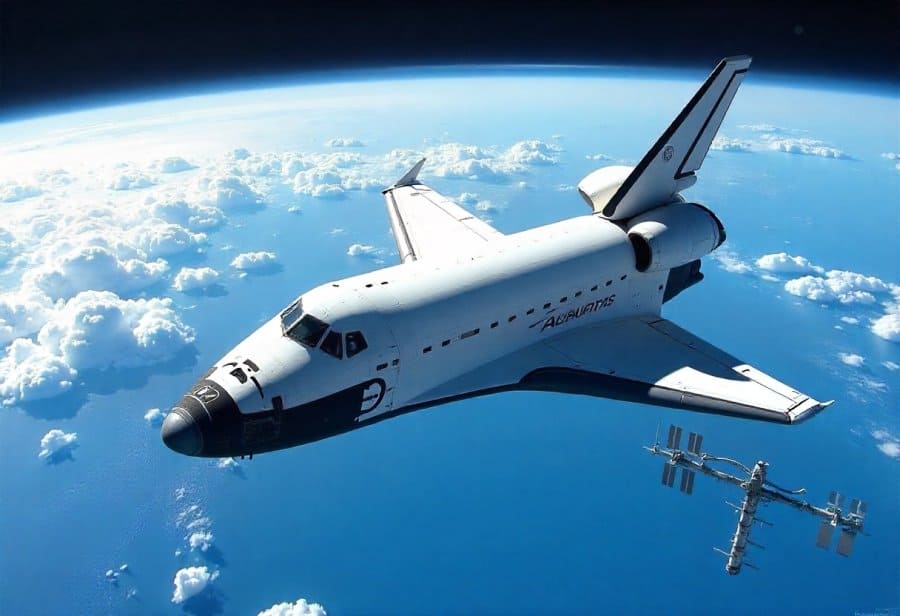
Atlantis’s Legendary Career: From First Launch to Space Exploration Icon
The Space Shuttle Atlantis’s career spanned nearly three decades, making it one of NASA’s most seasoned and dependable orbiters. Its first mission launched in 1985, a period when the shuttle program was still establishing its reputation and capabilities. From the outset, Atlantis demonstrated remarkable versatility and resilience, quickly earning a reputation as a workhorse capable of handling a wide array of complex tasks. Over the years, it completed 33 missions, each contributing uniquely to NASA’s overarching goals of scientific discovery, technological advancement, and international cooperation.
Throughout its operational life, Atlantis was instrumental in advancing space science and infrastructure. Its most notable achievement was servicing the Hubble Space Telescope, performing multiple repair and upgrade missions that extended its operational life and vastly improved our understanding of the cosmos. These delicate spacewalks showcased the skill of Atlantis’s crew and the spacecraft’s precision, pushing the limits of what was technically feasible in orbit. The shuttle’s ability to perform such complex tasks cemented its reputation as a reliable platform for scientific and technological milestones.
Beyond servicing satellites, Atlantis played a vital role in constructing and maintaining the International Space Station. It transported critical modules, scientific payloads, and supplies that supported long-term human presence in space. Its cargo included large solar arrays that powered the station and maintenance tools essential for its day-to-day operations. These missions helped establish the station as an enduring symbol of international collaboration, with Atlantis serving as a key logistical link that kept it functioning and scientifically productive for years.
The technological innovations developed over Atlantis’s career reflect NASA’s broader goals of continuous improvement and safety. Each mission brought new advancements—improved spacecraft systems, thermal protection technologies, and robotics—that made subsequent operations safer and more efficient. Atlantis often led the way in adopting these innovations, demonstrating NASA’s commitment to pushing the boundaries of engineering. Its ability to adapt to emerging challenges and incorporate new technologies became a hallmark, setting standards for spaceflight safety and operational excellence.
Resilience defined Atlantis’s operational record, especially as it faced technical hurdles and setbacks. Like other shuttles, it encountered problems along the way, but the crew’s expertise and the spacecraft’s robust design meant issues were addressed quickly and effectively. These moments of challenge underscored the importance of meticulous engineering and well-trained personnel, reinforcing public trust in NASA’s capabilities. The shuttle’s successful missions despite obstacles proved that perseverance and precision could overcome even the most daunting technical issues.
Atlantis’s career also exemplified adaptability. It was frequently tasked with handling the most complex and demanding jobs in space, from deploying satellites to repairing the Hubble to building the International Space Station. Each mission built on the last, incorporating new technologies and operational lessons that improved safety and efficiency. This adaptability ensured that Atlantis remained relevant and capable throughout its long service life, embodying NASA’s spirit of innovation and resilience.
Its legacy extends beyond technical achievements. Atlantis served as a symbol of human ingenuity and international collaboration. Its missions fostered partnerships with numerous countries and organizations, helping to build a global framework for space exploration. Each successful flight reinforced the idea that space is a shared frontier, and Atlantis’s contributions helped lay the groundwork for future cooperative efforts on missions to the Moon, Mars, and beyond.
Looking back, Atlantis’s career is a testament to the power of perseverance, innovation, and international teamwork. It demonstrated that with careful engineering, skilled crews, and a clear vision, humanity could achieve extraordinary things in orbit. The shuttle’s legacy continues to influence new generations of explorers and engineers, inspiring ongoing efforts to push the boundaries of what’s possible in space. Atlantis’s story is a cornerstone of NASA’s history—an enduring symbol of how far human spaceflight has come and how much further we can go.

Shaping the Future: How Atlantis’s End Sparks New Horizons in Human Spaceflight
The retirement of NASA’s shuttle fleet marked a turning point in human spaceflight, reshaping the way the U.S. and the world approach exploration beyond Earth. With Atlantis’s final mission in 2011, NASA shifted from relying solely on government-operated shuttles to fostering partnerships with private companies and international allies. This change wasn’t just about ending an era; it was about embracing a new model that prioritized collaboration, innovation, and cost-efficiency. The move opened doors for commercial partners like SpaceX and Boeing, whose spacecraft now regularly ferry astronauts and supplies to the International Space Station. This shift has significantly lowered costs, increased launch flexibility, and made space access more routine than ever before, setting the stage for a more sustainable future in orbit.
However, the transition came with its own set of challenges. Losing the ability to launch astronauts from U.S. soil temporarily left the nation dependent on international partners, particularly Russia’s Soyuz spacecraft, for access to the ISS. This reliance underscored vulnerabilities but also accelerated efforts within the industry and NASA to develop resilient, autonomous crew transportation systems. The lessons learned from Atlantis’s decades of service—such as the importance of safety, reliability, and adaptability—are now woven into the design of next-generation spacecraft, ensuring that future missions are safer and more efficient. The end of the shuttle program prompted a reevaluation of priorities, emphasizing the importance of technological innovation and international cooperation to sustain America’s leadership in space.
Looking ahead, the impacts of Atlantis’s retirement continue to influence long-term exploration goals. The technological advancements and operational expertise gained during the shuttle era serve as a foundation for projects like Artemis, which aims to return humans to the Moon and eventually venture toward Mars. The innovations developed—such as improved thermal protection systems, robotics, and safety protocols—are integral to these future missions. The transition from shuttle to new systems symbolizes not just an end but a continuity of progress, as each step forward builds on the lessons of the past. This evolution reflects NASA’s unwavering commitment to pushing boundaries, even as older systems are phased out.
Beyond technology, the shift also emphasizes the importance of global partnerships and shared responsibility. The shuttle’s legacy of international collaboration helped establish a framework for current and future missions, highlighting that space exploration is a collective effort. The investments made in shuttle systems helped develop a more integrated approach—one that combines government, industry, and international stakeholders. This collaborative spirit is vital for tackling the complex challenges of deep-space exploration. As humanity sets its sights on Mars and beyond, the lessons of Atlantis’s career remind us that cooperation, innovation, and resilience are key to turning ambitious dreams into reality.
In the end, the end of the shuttle program was not just a logistical or technological milestone; it was a catalyst for transformation. It prompted a reevaluation of strategies, accelerated the rise of commercial spaceflight, and reinforced the importance of international partnerships. The technological and operational legacies of Atlantis continue to influence the design of future spacecraft and exploration initiatives. More than just closing a chapter, this transition has set the stage for a new era of exploration—one driven by collaboration, ingenuity, and an unyielding desire to explore the unknown. As we look to the future, the spirit of Atlantis’s mission remains a guiding force, inspiring new generations to reach further into the cosmos.
The transition also highlighted the importance of ongoing innovation in crewed spaceflight, with NASA and its partners continuously refining vehicle designs and safety measures. This evolution ensures that future missions will benefit from the lessons learned during Atlantis’s storied service, shaping safer and more effective exploration endeavors. For a deeper understanding of its historical significance, you can explore the significance of atlantis’s final space shuttle mission in 2011.